October 29, 2015

Made Whole


I want to paint a picture for you. Imagine Jesus surrounded by sick, deaf, blind, paralyzed, hurting people. What look is on his face? I always imagined his face to be somewhat stoic and impersonal. But then I read Matthew 9:36 which says, "When he saw the crowds, he had compassion on them, because they were harassed and helpless, like sheep without a shepherd." Jesus' face would not be like a statue, doing the duty of healing. His face is full of compassion and care, and love for the people surrounding him. All of Matthew 9 is about Jesus healing people. He heals the dead daughter of a ruler, two blind men, a paralyzed man, and numerous other people as he travels through the country. When I read the ending verse of his compassion for the crowds of people, I had to reread the whole chapter in a new light. I could see him meeting a blind man, cupping his face in his hands and staring deep into the unseeing eyes, and I could see his will to heal that man. I saw him stoop low to be on the same level as the paralyzed man, I could see him gripping the hand of the dead girl. His heart was full with the will to heal people; his desire and joy was to see people made whole.


And then I saw him at the Well, surrounded by needy people, with his heart full of compassion and love for them, and an eagerness to see them whole. I must confess I was humbled by this image. Often, when I get a moment to sit among our guests, without any tasks to distract me, I realize just how much I love being with them. But it's not long before I also realize just how much need there is in our family room and I am overwhelmed. We do what we can, but it is nowhere near enough to heal people from addiction, mental illness, and poverty. I was humbled at the thought of Jesus on one of the couches in the family room, because he is the one who walked this earth and healed the blind, the paralyzed, the deaf, the diseased, raised the dead, and forgave human brokenness. Jesus made people whole, and he can and will make people whole again today.


In the next verse, Jesus tells his disciples, "the harvest is plentiful, but the workers are few. Ask the Lord of the harvest, therefore, to send out workers into his harvest field." I tend to repeat that verse and am discouraged by how much work there is to be done and how few workers there are. But that is the wrong perspective. The harvest, or the people ready to enter God's kingdom, ready to meet Jesus and his way, is enormous. However, that is not a problem when we remember there is a Lord of the harvest, and he wants to send workers out. I have seen this even in the past two weeks as volunteers have put themselves forward. From individuals who want to commit to coming once a week to help during the day at the Well, to a full team of enthusiastic engineering students from USF unexpectedly came to serve at the Banquet. The regular Banquet team was able to take the night off and eat dinner as a guest thanks to them. I, nor others at the Well, have sought these volunteers, but they still hear and they come to take part in the work at the Well. They still come to do their part in this small corner of God's kingdom, because it's God's will and joy to connect them here. God wants to send people to do his will and it is him sending them. And he sends us because he wants to see people whole. He wants to see us made whole in the work of serving him and loving our neighbor, and see our neighbor made whole as they encounter the love of God through community.


So don't be discouraged by overwhelming need or brokenness you may encounter. It is Jesus' will to heal people, and his joy to send us out.

September 18, 2015

The Wrong People


When investors look into a potential investment they are interested in making sure that they are investing in the right people. They also might hope that the right people have the right strategies, tactics, and expected outcomes. At the Well we invest in people all the time. While we don't deal with a lot of money it still wouldn't be wrong to refer to us as investors. We invest in people with hopes of returns. Our strategy and tactic however is that we invest in those whom your traditinal investors would probably consider the wrong people. We look for those who are having a hard time, those who struggle with mental health issus, those who are unemployed, those who are isolated, and we invest in them. We do this because we believe it is right and we believe it is also the right strategy. 

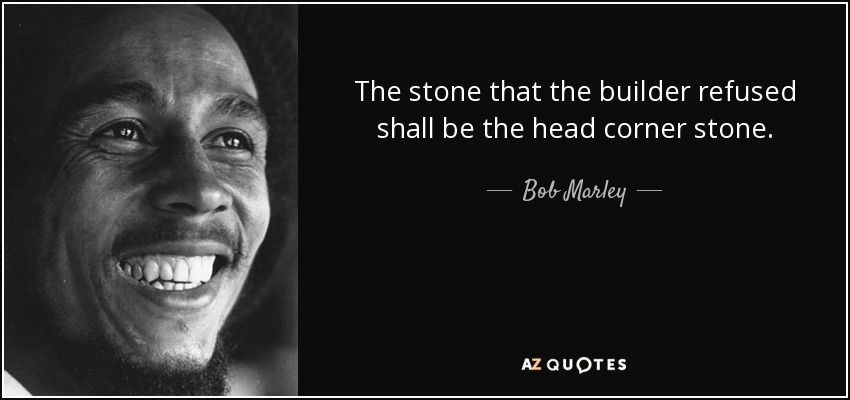
There is a passage from the bible that you may know, even if you don't know the bible well, thanks to Bob Marley: "The stone that the builders refused has become the head cornerstone." 

Have you ever worked on or visited a construction site? Do you know where you might find stones that the bulders refused? I have and I know exactly where you find them. You find the rejected stones in the trash pile. God, it seems, is a dumpster diver. Gathering stones, even the keystone itself, from the refuse pile and assembling them into a kingdom. 

This is why we believe that working with the folks that our society has rejected is exactly the way that God would have us invest in our city. It is with these stones that the builders refused that the kingdom of God will be made known. Just as life springs from the compost heap so glory rises from ashes. We stand with the despised and rejected and we invest every bit of our time and energy and resources in them because we know that these "wrong people" are exactly right for the work of redemption in Tampa. 


September 1, 2015

Always on Stage


Have you ever been on a stage? Usually a stage implies an audience. Stages are places where performances are done or where speeches are given and where audiences cheer or boo the one in the spotlight. There are very different responses among people when it comes to the reality of being on a stage. For some the idea of public speaking or being front and center on a stage is terrifying. Others crave attention and live their lives as though they are always on stage. I imagine there are some pretty unhealthy reasons for both drives. We all lean one way or another and must live our lives as best we can with that reality.

If you think about your own life as a kind of stage play you will realize that you have an element of your life that is lived on stage and another portion of your life that is lived behind the curtain backstage. You have a private life and then a public persona if you will. Depending on the kind of person you are you will choose to keep certain parts of your life private while other portions of your life are proudly presented to the public. Especially in the age of social media we are a people that are constantly creating personas or avatars that may or may not actually represent who we are backstage. All of us, if we are capable of honest reflection, know that there are many things in our lives and personalities that we are not exactly proud of. We usually choose to keep those things backstage while we often want everyone to know when we accomplish something or do something good and we proudly display them on our stages (never mind that Jesus encouraged us to confess our sins and then pray and fast in secret and when giving not to let our left hand know what our right is doing).

We make choices. We make choices about overcoming fears about getting on stages when needed or learning humility and stepping off of the stage at times too. The choices we make are important. It is important that we push ourselves to make good choices but more fundamentally it is important that we have the ability to make those choices to begin with. Could you imagine if this choice was stripped from you? What if you were forced onto a stage and had to live your whole life there, a perpetual audience watching and judging. Conversely, imagine you were forced to live the life of an invisible person? What if nobody saw you ever? Choice matters. Mankind was created to be free. Either of the scenarios above would be dehumanizing, in that they would strip a person of their human freedom. One would be turned into a kind of zoo animal while the other would be a kind of non-being.

Our friends who live on the streets often experience life as both. Because they have no private residence they are forced to live life on stage. Sleeping, washing, drinking, urinating, you name it, if nobody shares their space with you it must be done in public, on stage. At the same time these men and women that live their lives in full view of everyone are also treated as though they are invisible. People intentionally act like they don't see them and they constantly divert their gaze. On stage and invisible existence at the same time.

The other night a few of our friends who live in this perpetual tension had a particularly terrible and degrading experience. While they slept, on stage and totally vulnerable to anything, a car full of teenagers pulled up and proceeded to throw eggs at these brothers of ours. As they shared this experience with me in the morning and literally had egg on their faces I couldn't help but think of this stage image. We actually have a saying about having egg on your face which is a reference to having made an ass of yourself on a stage where a crowd booed and threw eggs and other items at the actors. These men live on a perpetual stage in a society where the audience who sees them either pretends not to or typically spews venom and hatred.

I wanted to share this for two reasons: One, to be a confession about our culture that dehumanizes and dishonors the most vulnerable among us. That thing which we want to ignore or hide should be confessed and put out on stage, because Jesus. Two, because I hope it breaks your heart.


May 7, 2015

Tampa, Bicycles, & How You Can Make a Difference


May is National Bike Month! Established in 1956, National Bike Month is a chance to showcase the many benefits of bicycling — and encourage more folks to give biking a try. Here at the Well, every month is bike month and we are so happy to see this national initiative to get more folks cycling. More bikes taking to the streets in Tampa will mean healthier neighbors, more connected and engaged communities, more investment in infrastructure for safer roadways, and hopefully less and less cars congesting our cities streets (and eventually less land wasted on parking lots). It may also mean some less exciting stuff too. 

Florida, of all the 50 states, has the most cyclist fatalities per capita annually. Along with the rest of Florida's cities, Tampa, in particular has always been known as a dangerous place to ride bicycles. In 2010 the Tampa Bay area was listed in dead last, as in "the worst in the nation" for all commuters according to Forbes.com. Among other observations was "The roads are engineered almost exclusively for cars, and not for bicycles." We have been on a long and slow (as in the longest and slowest in the nation) journey toward becoming a more walk-able, bike-able and therefore livable city. 

In the past three years, Tampa police have written 2,504 bike tickets — more than Jacksonville, Miami, St. Petersburg and Orlando combined. Of those tickets, as was made known to the public by a recent TBT investigation, 8 out of 10 were issued to black folks. Tampa police are targeting poor, black neighborhoods and in addition to 8 out of 10 being black, 10 out of 10 are poor. Police say they are gung ho about bike safety and focused on stopping a plague of bike thefts. So by strictly enforcing obscure subsections of a Florida statute that outlaws things most people have tried on a bike, like riding with no light or carrying a friend on the handlebars they are targeting poor, mostly black people in our neighborhood. "This is not a coincidence," said now retired Police Chief Jane Castor. "Many individuals receiving bike citations are involved in criminal activity." This is true and pulling over poor black neighbors is a great pretense to violate their fourth amendment rights with unreasonable searches to unearth their addictions and/or poverty AKA "criminal activity. It is also a great dragnet to run every poor and black persons name for outstanding warrants for things like failures to appear in court or failures to pay former fines from previous and similar interactions with police. Day after day we are seeing our communities canvased, to both clear our streets of these 'undesirables' to make way for our master plan of gentrification and to book and fingerprint as many as possible so as to build a data base, because c'mon, these people are gonna commit crimes. 

Here at the Well we often discover best practices by trying to do the exact opposite of the city of Tampa. When Tampa rules that it is illegal to fall asleep in a public place like the park, we open our doors and offer couches for folks to get some rest. When the homeless are unwanted in just about every nook and cranny of this city we open our doors, our arms, and our lives to welcome with warm hospitality those who so desperately need a place to make themselves at home. When elsewhere they are despised as bums and jeered as lazy, here they are our friends and teachers and co-laborers.  

So while the League of American Bicyclists is sponsoring May as National Bike Month, and while Tampa is a notoriously dangerous place to ride a bike in general ( and particularly if you are poor and black) we want to applaud our friends and neighbors, Tampa's poor, who are truly the most committed and dedicated of cyclists. Perhaps this came to be because they do not have cars, bus passes or other forms of transportation but there are, none the less, no other demographic in Tampa more faithfully committed, in spite of the challenges, to making Tampa a bike-able city. 

We have watched countless friends who have built bikes here at our ReCycle bin end up being harassed by TPD because they did not have lights on their bikes, many of whom needlessly end up in jail. Many others have ended up in hospitals because Tampa is still a very hard place to be a cyclist. Just this week we got a bike donated that had a bent frame from being hit by a car, we recognized it because it had been built here and the owner, who is still recovering from his injuries, is a friend of ours. 

Please help us make it possible for these cyclists to stay safe and legal. Would you please consider donating bike lights that may protect our friends from oncoming traffic as well as police harassment? Just two lights on each bike can make such a huge difference.  So during this National Bike Month would you help us gather 1,000 bike lights to distribute to some of Tampa's most vulnerable cyclists? 

You can drop lights off at our center at 3023 N Florida Ave or The Ybor Daily Market located at 1920 E 7th Ave. 

Thank you all so much for your love and support.


March 4, 2015

I call her Joy

There is something about welcoming our guests  with a smile, a fresh a cup of coffee and a greeting of "what can we do for you today". It takes very little to please them. Their reactions give deeper meaning to the saying that the simple things in life are the most pleasing. And because a few snacks and coffee easily makes their day, I find myself wanting to do so much more for them.

However, it wasn't often that I felt this way. When I first started to volunteer in the Free Market, I was overcome by shame. I am far from rich, but compared to what little our guests have, along with many others living in the city of Tampa, I could very well be labeled as such. It was in the moments of serving that I realized how I often took advantage of the things I had. I never knew how much a hot shower meant to me until I came into contact with people who hadn't washed in weeks. I regretted the days that I failed to clean my plate, only to throw away good food because it didn't quite meet my taste. For awhile guilt and shame interfered with the way I served. I constantly felt like I wasn't doing enough and would feel terrible if we didn't have something that a guest needed.

So I began to pray; and  through prayer I learned to replace my guilt with gratefulness. I now use what God has blessed me with to bless others. The greatest blessing I have been able to give has been my time. Time given to listen to their stories. Time given to tend to their needs. Time well spent that is given to a community that absolutely deserves it. I don't want it back, because my time given gave birth to feelings that were at first unexplainable and foreign to me. The only way to describe it was the feeling you get coming off of the high end of a roller coaster mixed with blissful tingles you receive after an awesome hug.

Joy...is what I think they call it.

And the more I experienced her the more I greedily wanted more of her. You see, joy isn't like other emotions: fleeting. Here one day and gone the next. She is lasting and she is true. Once she takes residence you have to feed her, and the more you feed her the more she grows and the more she grows the chances of removing her become nearly impossible. 

I don't think we take joy as seriously as we should. I mean she is directly connected to our thoughts, emotions and actions. Among other emotions we so earnestly seek, joy is the greatest of them all.

It took me awhile to find her but me and joy are getting more acquainted. I look for her in everything that I do, and my greatest hope is that the people I serve and serve with come to know and befriend joy just as I have.

February 23, 2015

Don't Play Tug-O-War with the Poor

Just over a year ago I wrote a five part series about urban development and gentrification in Tampa. The series was titled There Goes the Neighborhood and used the Nehemiah Project in Sulphur Springs as a starting place for the discussion. It was well received and I have since been encouraged to continue writing about local trends that impact the poor such as that campaign did, and is, and will. 

I live in the Ybor Heights Neighborhood in an intentional community known as the Lake House as it is on Lake Ave. Our little neighborhood has seen the least rise in median income over the last twenty years of any of the neighborhoods to the south and the east of the Hillsborough River. If you remember I spelled out this trend in the post on Demographic Inversion from the series. Our neighborhood is fairly small, very diverse in age and ethnicity, and it has many of the struggles you might imagine exist in a working class inner city community. With the very active VM Ybor neighborhood to our south and the booming Seminole Heights community to the north we are sandwiched between two popular places that hip young professionals might buy an urban bungalow. 

Our own particular area, about 0.028 sq miles has somehow remained, economically speaking, a fairly stable place over the last twenty years, slowly inching up in median income by 5% over that time, while VM Ybor to the south increased in median income by 20% and Seminole Heights to our north shot up 33% over that same period. One possible reason for this is that during that time, while nestled between development to our north and south, we were also shoulder to shoulder with Robles Park and College Hill public housing to the East and West. Lake Avenue was the main drag that ran from one to the other. These neighborhoods were both tough places, full of struggling families, and under tremendous police occupation. 

This part of the city is full of beauty and it is also full of pain and poverty. There are many who live in homes their families have had for generations if they are owners and even more that are in rentals. In 2002, College Hill's post war style housing projects known as The Ponce De Leon Courts were demolished and replaced by Belmont Heights which were built and fully occupied by 2006. The two places are not even comparable in terms of construction or aesthetic. The built environment was greatly improved while there was a major cost to many families who had called College Hill home. Major displacement of residents occurred because of far less units in the new construction, the mixed income model, and significant restrictions that were placed on who was permitted to live in Belmont Heights (i.e. No students, no felons, etc.). By the time the 2012 census numbers were taken, College Hill had increased its median income over the previous 20 years by 109 percent! Since that time, Tampa has been on a steady campaign to tear down all of the old style projects and replace them with Belmont Heights style housing. Neighborhood by neighborhood, the poor are being displaced to areas like Suitcase City in the University area. Robles Park is still on the list but will take some time before it's turn in the queue. So our adjacent neighborhood has been a little less sought after for development than our neighbors to the North and South. 

The neighborhood has seen its share of new faces to be sure; we ourselves were transplants here albeit a decade ago. We came here intentionally to learn to live in community, establish relationships with and learn from struggling neighbors, and also to do our best to be a bit of a light on a very rough street. We were full of dreams, ignorance, and arrogance and this place has been our school, our recovery, our awakening, and in many ways our salvation. We love Ybor Heights and do not intend to leave it. We also do not intend to stand by while it is bought out from under the very neighbors we have come to know and love. 

It is always scary when folks move to the community from more affluent middle class neighborhoods because they can bring with them a certain set of values, values such as security & cleanliness, which when made priorities, can sometimes trump neighborliness or friendship. When a "not in my backyard" attitude moves into the community it is imperative that the neighborhood either engage the new folks  and open their eyes (or run them off) before code enforcement and law enforcement begin to be called on to "fix" what they perceive to be problems. Perhaps they don't even know the impact that such "improvements" can have on an already economically strapped and over-policed community. 

There's a white middle class family that moved into the neighborhood a little over a year ago that we have been very intentional about getting to know. They have turned out to be people that are committed to loving this neighborhood and sharing their resources to see the people around them thrive as well. They have opened their arms and doors to the community and also had a man who lived a street away from them move in with their family when he seemed to need that hand extended. It's beautiful and they have been intentional about working to gain the trust of the community around them. It is such a joy to see privilege and poverty meet in a way that heals and improves life for everybody involved. In sharing their life and resources and even their house with neighbors they have grown and learned and become more a part of this beautiful community. That community has also become a bit more beautiful because they have joined us. 

Across the street from this family is a huge house that has been renovated over the course of the year. As we have gotten to know them we have discussed the possibility of them purchasing the house so that there would be more space for others who need community, housing, and family. We knew that it would cost more than most other houses in the community because of its size and were prepared for that. As the house came closer and closer to being completed we started to realize that this house was being polished up to sell for large profit. Our guess was that it might list for 250k or maybe even 300k even though you can barely find a house in the neighborhood worth half of that. This place was very large and very well cleaned up, but also it is still on James Street, just off Nebraska ave between a radio tower and the interstate. It is hard to imagine someone who could afford this place wanting to move to this street. These neighbors were already on the block, already had demonstrated their commitment to the neighborhood over profit, and were the only folks around who might be able to buy such a place. We were all excited and waiting to see the price post since the house had been ready for a few days. 

Then one afternoon some painters rolled down the street and painted the neighbors house, the house next to the one for sale! (WTF?) We knew the price was going to be too high for the community but when they went to the trouble of changing the face of the street by cleaning and painting neighbors houses we knew...it's gonna be bad. That night it posted and here is the listing:


$419K!!! What the hell? Not only is this an outrageous amount for any house anywhere but in this neighborhood it is insane. It is also a huge middle finger to a community in which the most economically well off here could never afford it. It is a flag planted in our community by a hostile force. There is no way that the well being of the people who already live here in this community has been taken into consideration. Anyone who can afford that much for a house will not be ok with this neighborhood. They will not be ok with the dudes hanging out on the block, they will not be ok with the loud music, they will not be ok with the poorly kept homes, they will not be ok with the constant helicopters hovering over the street, they will not be ok with the local restaurants (Checkers and McD's) and they will not be ok with the neighbors that have to sleep in the park just a block away. Now I'm not saying they should be ok with all of these things, many of us want to see some of those things change ourselves but we do it by working in the community and not by force (as in code or police or economic leverage). 

In a neighborhood with 20% unemployment and 50% of its residents below the poverty line, this house is a disaster. We are not against development, though, often, when you are for the people you will not be on the side of development either. This house could be a tremendous asset to the work already being done in Ybor Heights but instead it is being paraded around as though it was the nicest house in Seminole Heights. It is not in Seminole Heights and we don't want to see what happened there happening here. 

Painting another house on the block is a particularly disturbing move. What seems like a nice gesture is done for the sole purpose of selling this house at an outrageous price. It will effect those neighbors housing value and will therefore affect the taxes they owe each year if they are owners. If they are renters it is just a matter of time till they are all put out to make space for better off (and whiter) folks who will pay higher prices. I am very tempted to engage in the exact same tactic of manipulating the 'broken windows' theory and tagging the neighbor's house (I actually could get their permission too), registering it on the sex offender list, and parking an RV out front of it. We can drag that house down just as they can lift our houses right out of our reach if we let them.* It shouldn't have to be this way. 

Communities will change as more money comes into them and it is so important that we guard against any displacement that might keep folks who have been there from benefiting from those same improvements. We cannot continue to watch poor folks pushed away from one community after the next because of flexing economic and political power. Either we need to face them, talk some things out and open there eyes to the realities in our community or we need to run them off. 

None of this is about being against. At least not primarily. We are for something. We are for peace and reconciliation. We are for justice and mercy. We are for community development and organizing. We are for the Kingdom of God. When you are for the Kingdom, you are to stand against every reality that is not consistent with that promised future. That future kingdom where the poor are cared for and where justice rolls like a river and righteousness like a never failing stream. 

Nobody here was asked. Nobody here has been considered. 

If I was asked though, this house should not sell for more than 300k...and first dibs should go to the community the house is in before offering it to just anybody with money. 


*While for me, such tactics are a temptation it has already been a reality for a few others as the house has been intentionally flooded once and also defaced with spray paint a time or two. I assure you the drug dealers see the same problem we see and you really don't want to be the family that buys that home.



February 3, 2015

Dearly Loved

 
The young woman stumbled into The Well's front desk and mumbled her name. She was wearing just a dirty white pair of men's tight boxers and a short t-shirt. Heading to the coffee station to fill her cup, she bumped into several guests. She hardly reacted as they expressed their displeasure at the hot coffee splattering on them and on the floor. That was my first encounter with the woman I came to know as Amy.

I immediately headed toward her that morning and tried to guide her to an empty seat in our Family Room. She was unhappy, incoherent and mumbling to herself. I went to the clothing closet and picked out a pair of comfortable capris and a clean t-shirt. I tried my best to not offend her as I encouraged her to go in the restroom and change her clothes. Visibly agitated, she mumbled something unintelligible to me but followed my suggestion and accepted the clothing.

The following morning, Amy came back and quietly checked in at the front desk as I went about my morning routine. After about 30 minutes, she left. Less than an hour later, she stumbled back into the coffee station grabbed a stack of napkins, wetted them and proceeded to bathe herself in front a room full of people. I stopped her and asked her to go the bathroom if she needed to freshen up. Again, she seemed angry and frustrated but didn't communicate with me directly. Amy and I continued to have similar interactions for the next three months or so. It was then that she stopped coming to The Well for several weeks and I became concerned that something terrible might have happened to this young woman who I'd never even really had a conversation with.

I was in the prep room one morning getting ready for breakfast, when one of our floor volunteers came to get me. Amy was at the front desk asking for me, they said. Surprised but relieved, I hurried out front to see her. She was well-dressed and sober. She hugged me tightly, and I hugged her back. I had never seen her lucid before and was shocked initially that she even remembered who I was.

Standing there in the Family Room, Amy excitedly told me the story of her arrest and how she begged the judge for help getting into rehab. She remembered me, and had even thought about me while she was in treatment. With pride, she introduced me to the case worker who, even though she was standing next to Amy the whole time, had escaped my notice. Amy handed me the rehab facility's information and asked if she could use me as her contact for the case worker. I agreed of course, and wished her well as she left smiling and pleased with herself. As people jostled by me in and out of the Family Room, I stood in the front doorway overcome by the exchange I'd just had with Amy.

I have always known the rational reasons why I come to the Well to serve every day. I often have doubts though whether my presence has any meaningful impact to the people around me. Amy and my interaction that morning left us both somehow changed. After no more than a quiet acknowledgment of each other for many months, the open affirmation of our relationship was healing for both of us. I needed her just as much as she needed me. Her smile that day was all the encouragement I need to continue doing the hard work in front of me, even when it feels insignificant or impossible. Now I know that my kindness had that same effect on her.

Amy has become a regular guest at The Well again. She has good days and bad days just like the rest of us. Now she often stays around after we close, and cheerfully helps us to clean the bathrooms, the floors and all the coffee and tea splattered on the walls and doors. We all appreciate her very much. I asked her once why she left rehab so soon. She replied sadly that she couldn't afford the payments for her treatment, and so was asked to leave. In that moment, I was saddened not for her but with her.

The reasons for our struggles are never simple, and fighting to overcome our weaknesses alone is incredibly hard. Amy struggles in her own way. I struggle in mine. My role is not to fix Amy or to judge her. Like me, Amy knows her own wounds. Picking at them over and over again only causes the infection to worsen. Our relationship reminds me that my role here at The Well is to be present, to encourage people when they're struggling. I celebrate with people when they have the courage to face their own demons. I mourn with them when they fail. They mourn with me when I fail.

The name Amy means "dearly loved." I think that we are all Amy. We struggle and fight and fail and try again. And to the extent that we face this life together, hand in hand, we are stronger for having each other, and we are dearly loved through all of it.